

What is Family Counselling in Ankara and What Needs Does It Address?
Family counselling in Ankara is a counselling process that jointly addresses communication styles, role distribution, and daily life habits among family members. This work does not assume that a single person is "problematic," but rather starts from the question of how the family interacts as a whole. The aim is to support the family in recognising its own resources and re-establishing functional communication.
The reasons why families seek this kind of support and guidance process are diverse: increased tension at home, intergenerational disagreements, friction in sibling relationships, adjustment after divorce or remarriage, life cycle changes such as a child starting school or an adolescent entering puberty. Every family comes with its own story; therefore, instead of a standard prescription, a framework unique to the family is created.
At our centre, this process is led by a family counsellor trained in the field. Sessions are based on listening, collaboratively making sense, and identifying small, actionable steps. Throughout the process, respect for individuals' private lives and decisions is paramount; the counsellor is a guide, not a director.
This work is not a medical procedure and does not involve diagnosis or treatment. When a situation requiring medical evaluation is suspected in a family member, this is clearly stated, and the individual is referred to a relevant physician; the counselling process can continue alongside this referral.
We have compiled topics frequently asked by families searching for a psychologist in Ankara or psychologist recommendations in Ankara on our psychologist in Ankara recommendations page; family sessions are planned at our centre in Çankaya Kavaklıdere.
Who is it suitable for?
Family counselling can be considered not only for major crises but also for small, repetitive patterns that make daily life difficult. Parents, children, adolescents, and sometimes grandparents can be part of the process.
It is not a requirement for all family members to participate simultaneously; sometimes, the process begins only with parents, or even with a single family member, and participation is expanded as needed.
- Recurring communication disagreements
- Disagreements in parenting approaches
- Adjustment to life transitions (relocation, new sibling, retirement)
- Processes of loss, divorce, or restructuring
What does it not aim for?
Family counselling does not aim to label any family member as "right" or "wrong." Similarly, diagnosing an illness or prescribing medication is not within the scope of this process.
The purpose of the process is to make the family's internal communication patterns visible and to support the family's own decisions for change.
When Should Family Counselling in Ankara Be Considered?

Families often decide to seek support when they reach a certain threshold; however, taking early action is often more effective than waiting for the problem to escalate. The search for family counselling in Ankara can be driven by both crisis situations and predictable life transitions.
One common issue is differences in discipline and boundary-setting between parents. When one parent adopts a more flexible approach and the other a more rigid one, children are affected by this inconsistency, and domestic tension increases. In such situations, sessions provide a basis for parents to establish a common language.
Another common issue is sibling relationships. Jealousy, comparisons, or imbalances in sharing responsibilities can gradually heighten the family atmosphere. Additionally, unclear boundaries with the extended family, grandparental interference, or different generations' approaches to child-rearing are frequently discussed topics.
In situations such as divorce, remarriage, or a family member experiencing a long-term change (job loss, relocation, significant bereavement), family counselling can be considered to maintain family integrity. During these transitional periods, a shared space for discussion is beneficial for each member to adapt at their own pace.
Difficulties in parent-child relationships
A child showing behavioural changes at school or home, reduced communication with parents, or continuous conflict are common reasons for a family to start a counselling process together.
In these cases, sessions usually begin with the parents, then expand to include the child if deemed appropriate.
Life transitions and crisis moments
A relocation, the birth of a new sibling, a parent's long absence, or the loss of a loved one can disrupt the family's accustomed balance. In such periods, counselling supports the family in establishing a new order together.
- Co-parenting arrangements after divorce
- Remarriage and blended family adjustment
- A family member's adjustment to a major life change
- Reuniting after a long period of separation
Differences Between Family Counselling, Couples Counselling, and Individual Counselling

Many individuals seeking support in Ankara wish to clarify which type of counselling is suitable for their situation. Family counselling, couples counselling, and individual counselling, although seemingly similar, differ in their focus, number of participants, and the level of relationship addressed.
Individual counselling focuses on a single person's inner world, habits, and life arrangements. Couples counselling addresses the relationship dynamics between two people. Family counselling, however, takes a broader approach, examining the interaction system created by multiple family members together.
When deciding which process is appropriate, the scope of the issue and who it involves is an important criterion. Sometimes, a topic may start with an individual session, and as the process progresses, it may transition to family or couples sessions; these transitions are planned collaboratively with the client.
Which option is preferred in which situation?
If the problem is solely related to an individual's inner world, individual counselling is a more suitable starting point; if it concerns the relationship between two people, couples counselling; and if it involves multiple family members, family counselling.
| Criterion | Individual Counselling | Couples Counselling | Family Counselling |
|---|---|---|---|
| Number of participants | One person | Two people | Two or more family members |
| Focus | Individual's inner world and habits | Communication between two people | The entire interaction system of the family |
| Common topics | Daily life arrangements, anxiety management guidance | Communication breakdowns, responsibility sharing | Parenting, sibling relationships, generational differences |
| Form of participation | The client themselves | Usually both parties together | Variable participation as needed |
| Example reason for seeking help | Seeking personal awareness and support | Communication difficulties in marriage or partnership | Domestic tension, adaptation to transition periods |
What to Consider When Choosing a Counselling Centre in Çankaya

Individuals searching for family counselling in Çankaya typically compare several centres before making a decision. One of the most critical factors in this comparison is how openly the centre shares information about its staff and working methods. Clear visibility of educational backgrounds, areas of work, and communication channels is the first step in building trust.
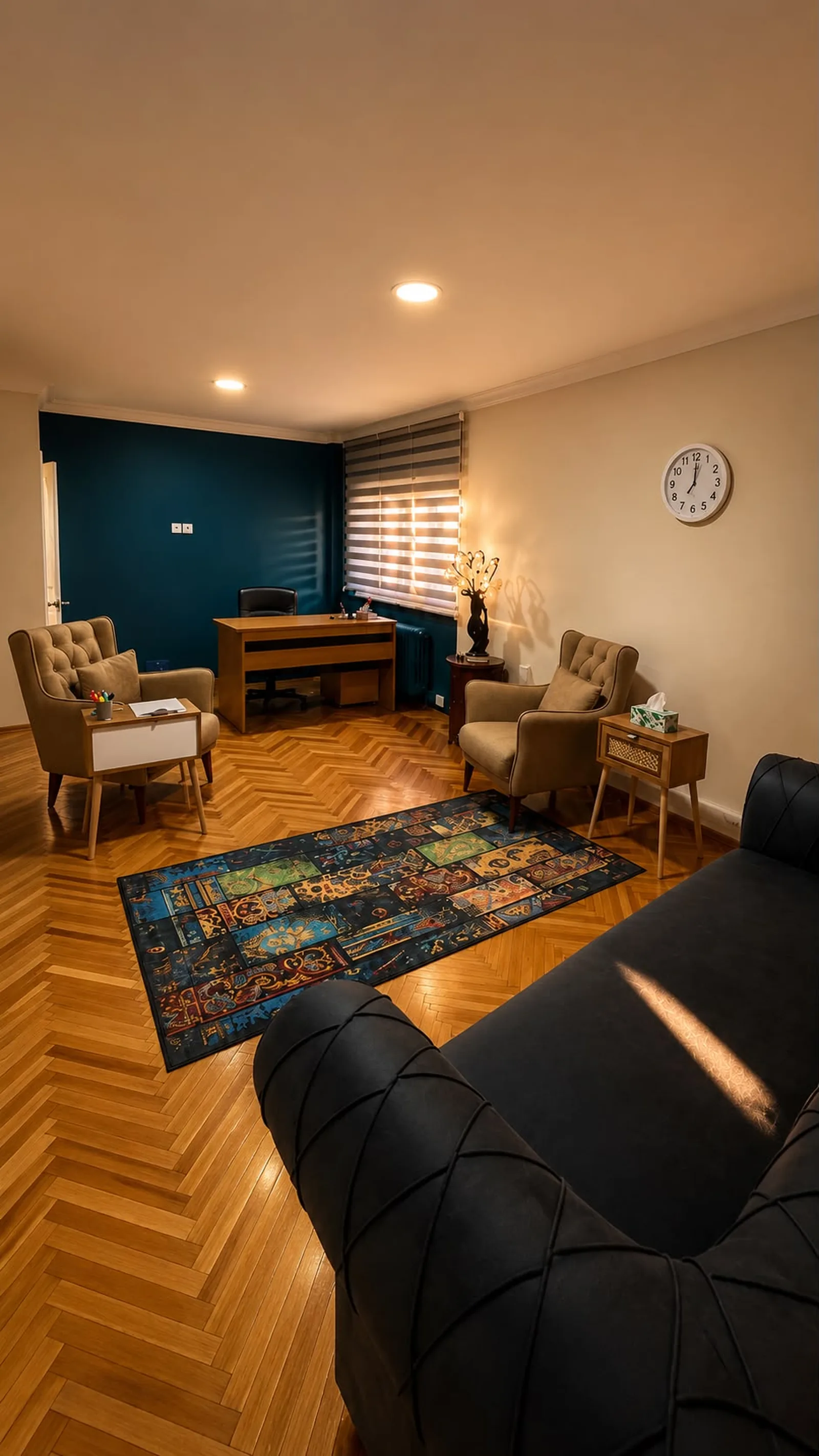
The second important criterion is the suitability of the counselling environment for privacy. The quietness of the waiting area, sound insulation of the session room, and appointment scheduling that minimises encounters with other clients are particularly important in family sessions, as multiple individuals participate together.
The third criterion is ease of access. The area around Kavaklıdere and Paris Caddesi is easily accessible from regions such as Kızılay, Tunalı Hilmi, Bahçelievler, and Çukurambar. For regular sessions to be sustainable, easy access is a practical necessity.
Questions to ask
When first contacting a centre, a few brief questions can provide a clear idea of the process. Receiving open and patient answers to questions can be seen as a positive indicator for the rest of the process.
- Who will conduct the sessions, and what is their educational background?
- Which family members are recommended to attend family sessions?
- How are appointment frequency and duration determined?
- How is personal information protected?
Location of Özel Vivere Aile Danışmanlık Merkezi in Kavaklıdere
Özel Vivere Aile Danışmanlık Merkezi is located on Paris Caddesi in Çankaya Kavaklıdere, Ankara. You can review our centre's physical space and counselling environment on our Our Centre page before making an appointment.
How the First Session Proceeds and Who from the Family Attends

The first session is the stage where the family meets the counsellor and the framework of the process is jointly established. In this session, family members share their perspectives, and the counsellor listens and forms initial observations about the family's communication patterns. The aim is not to quickly reach a conclusion but to get to know the family.
Who attends the first session varies according to need. In some families, all members come together, while in others, it may be more appropriate to start with the parents. The participation of children and adolescents is planned gradually, according to their age and the nature of the issue.
During the session, the counsellor also explains how the process will work, confidentiality principles, and potential session frequency. This way, the family proceeds knowing what to expect in the next steps.
How is the decision for participation made?
The decision for participation is made jointly between the family and the counsellor. Some topics may be addressed only between parents, while for others, it may be more beneficial for the entire family to be present.
- In the initial contact, usually one or both parents apply.
- Participation of children and adolescents is planned in an age-appropriate manner.
- Extended family members can be included in the process if necessary.
Expectation management
A clear solution should not be expected in the first session; this stage is more about getting acquainted and collaboratively understanding the situation. Concrete steps take shape as the family's needs become clearer.
The Counselling Process Step by Step
The family counselling process goes through specific stages; these stages can be flexible according to the family's needs, but the general flow is similar. Each step of the process is evaluated collaboratively with the family, and the transition to the next step is by mutual agreement.
In the initial stage, an introduction and situation assessment are made. Subsequently, regular sessions are planned in line with the goals jointly set by the family. As the process progresses, progress is reviewed collaboratively at regular intervals, and the approach is updated if necessary.
In the final stage, when the goals are achieved or by the family's decision, the process is terminated. Termination is also a planned step; it is not done abruptly but through collaborative evaluation.
Principle of flexibility
Since every family's needs are different, this flow is a general framework, not a rigid rule. Session frequency and duration can be readjusted according to the family's life arrangements.
| Step | What is Done | Duration / Frequency |
|---|---|---|
| 1. Introductory session | The family's situation and expectations are heard, the process is explained | Approx. 45-50 minutes, one-off |
| 2. Goal setting | Concrete and observable goals are established collaboratively with the family | Within the first 1-2 sessions |
| 3. Regular sessions | Sessions continue with family members in line with the defined goals | Generally weekly or bi-weekly |
| 4. Interim review | Progress is reviewed collaboratively, the approach is updated if needed | At regular intervals, e.g., every few sessions |
| 5. Termination | The process is concluded when goals are achieved or by family decision | Planned collaboratively with the family |
Face-to-Face and Online Family Sessions
Some families seeking family counselling in Ankara prefer online sessions due to busy work schedules, family members living in different cities, or travel difficulties. Our centre offers both face-to-face and online session options; which one is suitable is evaluated collaboratively based on the family's situation.
Face-to-face sessions facilitate the observation of body language and group dynamics, especially in sessions where multiple family members participate simultaneously. Online sessions, on the other hand, are a practical alternative for families with geographical distance or time constraints.
In both formats, confidentiality principles are applied with the same meticulousness. For online sessions, ensuring a secure connection and a calm environment should also be planned in advance by the client.
Which option should be preferred?
If family members live in different cities or are in a busy period, online sessions are suitable for starting; it is also possible to transition to face-to-face sessions in later stages.
| Topic | Face-to-Face Session | Online Session |
|---|---|---|
| Ease of participation | Requires travel to the centre | Possible to participate from different cities/locations |
| Observation of group dynamics | Body language and interaction more visible | Observable to a limited extent via screen |
| Environment | Centre's calm and private room | Depends on the quietness of the client's own environment |
| Suitable situations | Sessions requiring multiple family members to be together | Families with time or distance constraints |
| Application of confidentiality | Physical privacy provided by the centre | Secure connection and calm environment planned collaboratively with the client |
Confidentiality, Ethical Principles, and Record Keeping

Information shared during the family counselling process forms the basis of the trust relationship between the client and the counsellor. Therefore, what is discussed in sessions is protected within the framework of confidentiality principles and recorded only for the purpose of carrying out the process, to the extent necessary.
As multiple individuals participate in family sessions, a clear framework regarding who can share what with whom is established from the outset. For example, whether information shared in an individual session will be shared with other family members is discussed beforehand.
In accordance with ethical principles, the client is always informed about how the process will proceed, and their decisions are respected. If a situation requiring medical evaluation is identified, this is clearly stated, and the individual is referred to a relevant physician.
Storage of records
Notes on sessions are kept in a limited manner to ensure the consistency of the process and are not shared with third parties. Principles regarding the protection of personal data are adhered to during this process.
Family privacy
The extent to which information shared by one family member will be shared with other members is clarified jointly in the first session; this both protects trust and supports the healthy progress of the process.
Access from Which Regions of Ankara, Transportation and Appointments

Özel Vivere Aile Danışmanlık Merkezi provides services at Paris Caddesi No:16 D:5, Çankaya Kavaklıdere, Ankara. This location, due to its proximity to central districts such as Kızılay, Tunalı Hilmi, Bahçelievler, and Çukurambar, is an easily accessible point for families coming from different regions.
Our centre can be reached via public transport routes on the Kızılay-Tunalı Hilmi line and nearby metro-bus connections. For clients preferring to come by car, parking facilities are also available in the vicinity; it is recommended to contact us before the appointment for precise information.
Furthermore, for families coming from different parts of Ankara such as Çayyolu, Ümitköy, Keçiören, and Etlik, the central location is an advantage that makes regular sessions sustainable. The option of online sessions can also be considered for families from distant regions.
To make an appointment, you can contact us via phone or WhatsApp; the date and time of the first session are planned collaboratively according to the family's availability.
Preparation before the appointment
Before the appointment, clarifying who from the family will attend the session helps make the first session more productive. It is beneficial to contact our centre in advance regarding this.
- Location on Paris Caddesi, close to Kavaklıdere
- Proximity to the Kızılay-Tunalı Hilmi line
- Parking facilities in the vicinity
- Online session alternative for distant regions
Sessions and fees
The table below summarises the general framework of family counselling sessions. The exact plan is agreed together after the first session.
| Topic | Information |
|---|---|
| Session duration | Approximately 45-50 minutes |
| Session format | Face-to-face or online, determined according to need |
| Participants | Family members as appropriate to the need, decided collaboratively |
| Session frequency | Generally weekly or bi-weekly, reviewed throughout the process |
| Payment / fee | Current fee information is shared via phone or WhatsApp. |
Due to regulations concerning price promotion in the health sector, fees are not published on the website.
Frequently asked questions
Family Counselling in Ankara reviews
Ratings and comments shared about the session experience (comments in their original Turkish)
0.0
0 Reviews
- 50
- 40
- 30
- 20
- 10
Family Counselling fee (2026)
Preliminary Consultation
15–20 minVAT incl. · 2026 official tariffFrom381,60 ₺Up to1.122,32 ₺Family Counselling
Popular90 minVAT incl. · 2026 official tariffFrom1.907,96 ₺Up to4.882,03 ₺
Source: Governorship of Ankara, Provincial Directorate of Family and Social Services — 2026 fee determination decision (No: E-11276684-500-19281497, 29.12.2025). All prices include VAT. The session fee is set within this range according to duration and scope.
Full official fee scheduleBook a session: Family Counselling in Ankara
When you fill in the form, your request becomes a WhatsApp message and we confirm the day and time together. You can also call 0544 134 29 05.