
Short answer
The key point first
Self-confidence in children is not nurtured by them doing everything perfectly, but through experiences where they are **allowed to try**, their **effort is seen**, and the **security of the relationship is maintained** when they make mistakes. Age-appropriate responsibilities, realistic feedback, and language free from comparison can all contribute to this process.
Are self-confidence and self-esteem the same thing?
Self-confidence often refers to a child's sense of competence in their ability to do a specific task. Self-esteem, however, relates to a child seeing themselves as valuable, independent of success. A child might struggle with mathematics but still feel loved and valued as a person.
This distinction also shapes the language parents use. Instead of only praising outcomes, making effort, strategy, asking for help, and trying again visible provides support without tying the child's worth to their performance.
This guide has been prepared for informational purposes for the Özel Vivere Aile Danışmanlık Merkezi Knowledge Centre; its content is not a substitute for diagnosis or treatment.
Parents looking for Ankara psychologist recommendations can find our general guide on our Ankara psychologist recommendations page.
How can parental attitudes affect self-confidence?
Children form many conclusions about themselves from experiences in their close relationships. Being constantly compared, given too much responsibility for their age, or being immediately rescued from every difficulty can hinder the development of self-confidence in different ways.
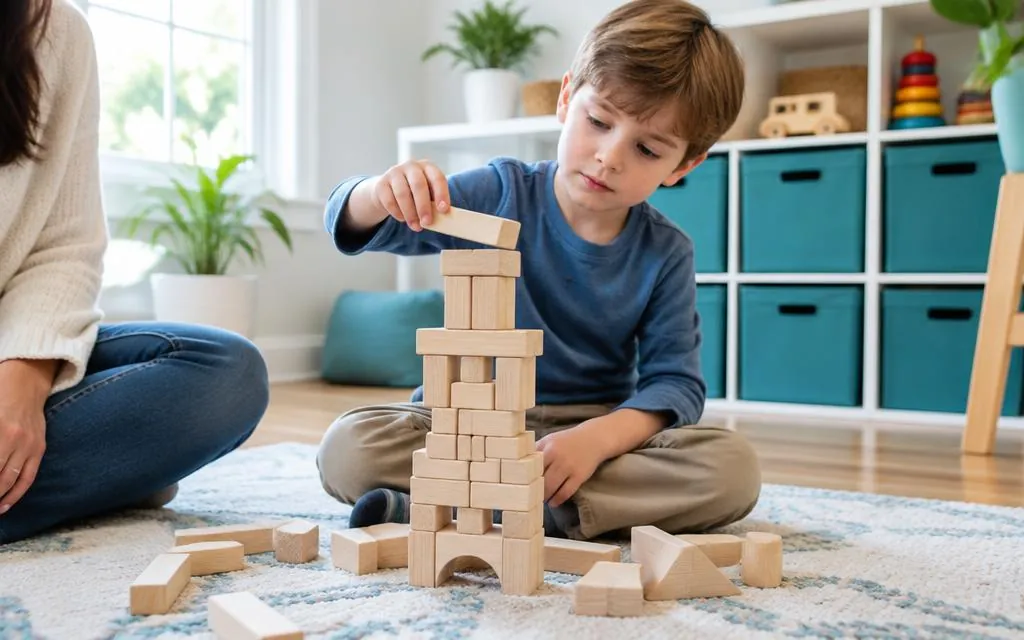
- Instead of doing things for your child, allow them age-appropriate room to try.
- Talk about the effort they showed and the method they used before focusing on the result.
- Set limits for behaviour without belittling their feelings.
- Compare them with their own previous progress, not with siblings or friends.
- Model asking for help as a learning skill, not a sign of inadequacy.
Supportive language in everyday situations
Although a parent's intention may be to encourage, very general praise may not show a child what they actually did well. Observation-based, specific, and realistic feedback is much clearer.
| Observed situation | Supportive approach | Language to avoid |
|---|---|---|
| Avoids trying a new task | Break the task into **small steps** and decide on the first one together. | What's there to be scared of? |
| Gets upset when making a mistake | Talk about the role of mistakes in the **learning process**. | You're so careless. |
| Compares themself to a friend | Make the progress in their **own development** visible. | Look how your friend is doing it. |
| Fails to complete a responsibility | Offer **age-appropriate reminders** and choices. | You never finish anything. |
| Is hesitant to speak in class | Encourage **small, safe attempts** to participate. | Don't be so shy. |
Supporting self-confidence at school and in social life
School success is only one part of a child's identity. When academic results, friendships, play, curiosity, responsibility, and creativity are considered together, a child doesn't feel compelled to judge themself by a single measure.
Holding back in social situations doesn't always mean a lack of self-confidence. Temperament, the time needed to adapt to a new environment, and trusting relationships are important factors. Instead of labelling the child, it's more helpful to observe the conditions under which they participate more comfortably.
When might expert support be considered?
If a child has long been avoiding new experiences, intensely seeks approval, reacts to mistakes in ways that affect their daily functioning, or experiences significant difficulties at school or with friendships, an assessment with a professional may be considered. These signs alone do not constitute a diagnosis.
In work carried out with children, parent consultations are an important component. The goal is not to “fix” the child, but to collaboratively understand their developmental stage, environment, and the resources within the family.
Questions & answers
Frequently asked questions
Short, clear answers to the questions people ask most about this topic.
Sources and scope
This content is for general information only; it does not replace diagnosis, treatment or a personal assessment.

About the author
Dijital Mustafa
Child Counselling and session fees
- Preliminary Consultation15–20 min381,60 ₺ – 1.122,32 ₺
- Individual Counselling60 min1.010,06 ₺ – 3.479,20 ₺
- Family Counselling90 min1.907,96 ₺ – 4.882,03 ₺
VAT included. Corporate counselling is free of charge. Source: Ankara Governorship, Provincial Directorate of Family and Social Services, No. E-11276684-500-19281497.
Next step
Let's talk through your question.
To learn more about child counselling, you can get in touch with Özel Vivere Aile Danışmanlık Merkezi.